

Updated: 25th September 2026
Key takeaways
- No single CAD platform wins at everything; the right pick depends on assembly complexity, budget, and team size.
- Free tools like DesignSpark Mechanical now cover use cases that used to require an enterprise licence.
- The market for these tools is growing. The global 3D CAD software landscape was valued at US$11.73 billion in 2024 and is predicted to grow to US$ 19.15 billion by 2032.
Choosing CAD software used to mean picking whichever tool your university or employer already had a licence for. All that has changed today.
Cloud-native platforms, free direct modellers, and open-source alternatives now sit alongside the traditional enterprise suites, and the right choice depends less on brand recognition and more on what you're actually building.
However, there's no such thing as a single "best" CAD software. A tool built for aerospace assemblies with thousands of parts solves a different problem from one built for a weekend enclosure design, and ranking them head-to-head hides more than it reveals. This guide breaks down 10 CAD platforms by what each one is genuinely best at, so you can match the tool to the job rather than the other way round.
How We Evaluated These Tools
We assessed each platform against:
- Licensing and cost: Subscription, perpetual, or free, and what's actually included at each tier
- Learning curve: How quickly a new user gets to a usable result
- Assembly and complexity handling: How well the tool scales from single parts to large, multi-part assemblies
- Collaboration features: Version control, cloud access, multi-user editing
- Ecosystem and integration: File compatibility, plugin support, and how well it fits into a wider design or manufacturing workflow.
1. DesignSpark Mechanical: Best for Fast and Free Direct Modelling
| Ideal for: | May not be ideal if: |
|---|---|
| Engineers who want rapid design, prototyping, and assembly creation. | You need advanced simulation or design automation. |
Quick specs: Free (Explorer) / paid Creator & Engineer tiers from $13.20 per month | Windows desktop only | For engineers, students, small teams.
Highlights
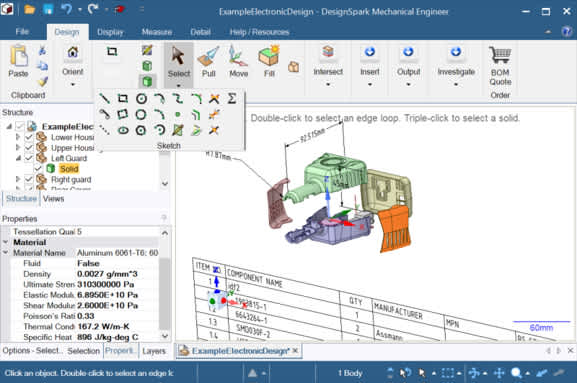
- Gesture-based direct modelling: Push, pull, blend, and combine geometry without managing a parametric feature tree.
- Unlimited projects and design size on the free tier, no hidden fees
- Assembly Tools (Engineer tier): Build constrained assemblies with exploded views and motion control.
- Over one billion manufacturer-approved 3D models via TraceParts, tagged for instant BOM generation and RS quotes.
- Professional drawing and exchange tools: Full GD&T and multi-standard drawing annotation, plus STEP/IGES/DWG/DXF exchange (Creator/Engineer).
DesignSpark Mechanical has a simple core pitch: address the CAD bottleneck. Changes that would mean reworking an entire feature history in SolidWorks or Creo are just a drag-and-reshape on DesignSpark, making it a genuinely different tool rather than a stripped-down version of one. It’s built for speed and iteration over managing complex design intent through feature history.
Licensing and cost: Explorer is free with no feature-limited core modelling and permitted commercial use. Creator and Engineer add GD&T drawing sheets, full file exchange, and (Engineer only) the Assembly Tool for constrained multi-part products. Both paid tiers include a 7-day trial.
Workflow fit: Best suited to concept development, enclosures, fixtures, assemblies, and rapid prototyping, where iteration speed matters most. Desktop-only on Windows, so it may not suit teams that require browser-based or cross-platform CAD access (Onshape and Fusion cover that later in this list).
2. SolidWorks: Best for Parametric Mechanical Design at Enterprise Scale

| Ideal for: | May not be ideal if: |
|---|---|
| Engineering teams needing production-ready parametric CAD, deep mechanical toolsets, and cloud collaboration | Budget-constrained solo users or hobbyists. No free tier, no perpetual licence option for new purchases. |
Quick specs: Standard $2,820/yr, Professional $3,456/yr, Premium $4,716/yr (official 2026 USD, single-user, cloud-connected license) | Windows, cloud-hybrid | Trusted by 8 million+ design and engineering professionals worldwide.
Highlights
- Named-user cloud licence with local install; work offline for up to 30 consecutive days
- AI Virtual Companions (AURA and LEO) are included on every commercial licence at no extra cost; command prediction, auto-fastener recognition, and generative drawings.
- The Professional tier adds intelligent fastener/hardware libraries, photorealistic rendering, and automated cost estimation.
- Premium adds electrical routing, piping/tubing design, and linear static plus motion analysis.
SolidWorks remains the default choice for mechanical engineering teams, not so much because of any single standout feature, but more because of its enormous installed base and third-party ecosystem of plugins, training, and CAM add-ons. It's perceived to be a safe, well-supported route into parametric CAD done in a well-established manner.
Licensing and cost: Purchased directly via solidworks.com as a single-user, cloud-connected named licence on quarterly or yearly terms. Comes with a 15-day money-back policy and a free trial.
Workflow fit: Production mechanical design, assemblies, and drawings for manufacturing and product design teams already trained on parametric CAD. Best for where a team has existing SolidWorks expertise or training budget.
3. Autodesk Fusion: Best for CAD, CAM, and Simulation in One Cloud Platform

| Ideal for: | May not be ideal if: |
|---|---|
| Teams wanting integrated CAD, CAM, and basic simulation without having to buy separate tools. | You need advanced 5-axis machining or heavy simulation without paying for extensions. |
Quick specs: Free (Personal Use, non-commercial, limited) or free for qualifying students/educators | Base Fusion $680/yr ($85/mo) | Manufacturing Extension +$1,465/yr | Cloud-connected on Windows/Mac.
Highlights
- Single subscription bundles parametric CAD, 2.5/3-axis CAM, linear static simulation, and PCB design.
- Cloud-based data management and real-time collaboration are built in from the base tier
AI features: Drawing Automation, AutoConstrain, and Generative Design. - Extensions layer on 5-axis machining, advanced simulation, and PLM (Fusion Manage) without switching platforms.
Fusion's pitch is consolidation: rather than licensing different CAD, CAM, and simulation tools, most small- to mid-sized engineering teams can run their entire workflow on a single subscription. That makes it a natural step up for teams scaling out of a free tool like DesignSpark Mechanical but not yet ready for SolidWorks or Siemens-level enterprise spend.
Licensing and cost: Monthly, annual, or 3-year subscription via autodesk.com. A free Personal Use tier is available for non-commercial hobbyist work with reduced functionality; qualifying startups receive discounted multi-seat access.
Workflow fit: Product design and manufacturing teams wanting design-through-CAM in one tool, particularly where CAM and basic simulation matter as much as modelling. Less suited to teams needing NX or CATIA-level assembly scale straight out of the box.
4. Designcenter X (formerly Siemens NX): Best for Complex Assemblies in Aerospace and Automotive
| Ideal for: | May not be ideal if: |
|---|---|
| Large enterprise teams managing massive assemblies and multidisciplinary product data. | You don't need Teamcenter-level PLM data management, or can't justify quote-based enterprise pricing. |
Quick specs: Quote-based, no published list price | four packaged tiers (Essentials, Standard, Advanced, Premium) plus 140+ token-licensed add-on modules | Runs on Windows
Highlights
- Synchronous technology edits any geometry, including imported files, without needing the original feature history
- Convergent/hybrid modelling combines parametric and direct approaches, including scanned mesh data
- Deep Teamcenter PLM integration for large-team data management and version control
- AI-enabled Topology Optimiser, Selection Predictor, and Voice Command Assist.
What this tool offers that most of the list doesn't is genuine scale: it's built to manage datasets and assemblies far larger than SolidWorks or Fusion are designed for, with an enterprise PLM backbone (Teamcenter) to match. That scale is also its cost, since pricing isn't published and typically needs a reseller conversation.
Licensing and cost: Quote-based via Siemens or an authorised reseller; no published flat-rate pricing on the official site.
Workflow fit: Aerospace, automotive, and industrial machinery teams managing complex, high-part-count assemblies with multi-team collaboration needs. Expect months, not weeks, of onboarding.
5. CATIA: Best for Large-scale Multidisciplinary Product Development

| Ideal for: | May not be ideal if: |
|---|---|
| Organisations doing systems-level product development that spans mechanical, electrical, and simulation disciplines. | You're a solo designer or small team. CATIA's licensing and complexity are built for large organisations. |
Quick specs: Mechanical Essential subscription $7,080/yr (official Dassault pricing) | Student Edition $60/yr | Cloud-based via the 3DEXPERIENCE platform.
Highlights
- Class-A surfacing for automotive- and aerospace-grade exterior design
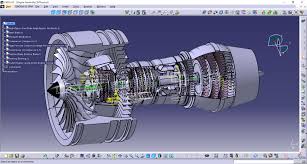
- Handles very large, complex assemblies and multidisciplinary system models in one environment
- Real-time synchronous design and collaboration via the 3DEXPERIENCE platform
- Direct modelling alongside advanced parametric, feature-based, and knowledge-based design automation.
CATIA's reputation as the most complex and most expensive tool on this list is largely earned: it's built for organisations designing entire vehicles or aircraft as connected systems, not single parts. For teams working at that scale, the systems-level integration is the whole point; for anyone else, it's substantially more tool and cost than needed.
Licensing and cost: Subscription via 3ds.com, integrated with the 3DEXPERIENCE cloud platform. A heavily discounted student edition exists for personal or educational use.
Workflow fit: Automotive, aerospace, and other industries that do large-scale, multidisciplinary systems engineering, where mechanical, surfacing, and simulation need to live in a single environment. A steep learning curve and licensing costs make it a poor fit outside large engineering organisations.
6. PTC Creo: Best for Parametric Modelling with Generative Design

| Ideal for: | May not be ideal if: |
|---|---|
| Engineering teams wanting strong parametric modelling plus built-in generative design and real-time simulation. | You need transparent, published pricing before talking to sale; Creo's cost isn't listed as a flat figure. |
Quick specs: Sold as configurable packages (Creo Design Essentials, Large Assembly Suite, and add-on extensions) via ptc.com's online store | Priced at checkout per configuration rather than as a flat rate | Runs on Windows.
Highlights
- Parametric and direct modelling in the same environment
- AI-powered generative design accelerates complex part and assembly development
- Real-time simulation (structural, thermal, CFD) built into the modelling environment, not bolted on
- Additive manufacturing extension for lattice structures and printer tray setup.
Creo combines traditional parametric CAD with generative design and real-time simulation in a single interface, so design and validation occur in a single loop rather than being handed off between tools. That suits teams doing iterative, performance-driven part design, though the modular extension structure means the real price depends heavily on which suites are needed.
Licensing and cost: Purchased through PTC's online store as configurable suites (Design Essentials, Large Assembly, Injection Moulding, Machining, MBD, Real-Time Simulation); exact pricing requires configuring a licence type at checkout.
Workflow fit: Aerospace, automotive, and consumer product teams needing complex modelling, generative design, and simulation in one workflow. A learning curve comparable to NX and CATIA.
7. Designcenter Solid Edge: Best for Teams in the Siemens Ecosystem

| Ideal for: | May not be ideal if: |
|---|---|
| Teams wanting Siemens' Parasolid modelling kernel and Teamcenter compatibility without NX-level cost or complexity. | You need a fully free tier. Beyond its browser-based Community option, most functionality sits behind subscription tiers. |
Quick specs: Tiered subscription (Design and Drafting, Foundation, Classic/Standard, Premium/Advanced) | Token-based add-ons, official first-month-for-$1 offer for new customers | Windows, plus a lightweight browser-based option.
Highlights
- AI-powered drawing automation and an AI Copilot for real-time design assistance
- Flexible token-based licensing lets teams add specific capabilities (PCB collaboration, electrical routing, point-cloud visualisation, simulation) on demand.
- Browser-based tier for lightweight editing with zero file translation
- Built on the same Parasolid kernel as NX, easing data exchange within a Siemens-based toolchain.
Solid Edge sits below NX in Siemens' own portfolio: mid-market pricing and complexity, but built on the same modelling kernel and PLM ecosystem. That makes it a practical entry point for a team that expects to need Teamcenter-level data management eventually but isn't yet ready for NX's cost or learning curve.
Licensing and cost: Subscription-only (XaaS) via Siemens, tiered by capability; token packs extend functionality without upgrading the whole licence.
Workflow fit: Mid-market manufacturing and product design teams wanting Siemens ecosystem compatibility at a lower entry point than NX. A reasonable middle ground between DesignSpark Mechanical's simplicity and NX's enterprise scale.
8. Onshape: Best for Cloud-native Collaboration and Version Control

| Ideal for: | May not be ideal if: |
|---|---|
| Distributed teams wanting real branching and merging on CAD data with zero local installation. | You need offline access. Onshape is browser-only with no offline mode. |
Quick specs: Free tier (non-commercial, public projects only); Standard and Professional tiers ($2,130 and $3,550, respectively); Enterprise quote-based | Runs on any browser-enabled device.
Highlights
- Fully browser-based, fileless architecture. That means no crashes from local file corruption, nothing to install.
- Built-in version control with true branching and merging, unlike file-based PDM bolted onto desktop CAD.
- Free for students and educators, and free Professional access for qualifying startups
Updates ship every three weeks to all users automatically.
Onshape's whole design philosophy is that CAD should work like modern software: branchable, mergeable, and always backed up centrally, the way Git treats code. That's a genuinely different model from every desktop tool on this list, and it's the reason distributed teams reach for it specifically.
Licensing and cost: Free tier for public, non-commercial projects; paid Standard and Professional tiers for private commercial work; Enterprise on request. No perpetual licence option, cloud subscription only.
Workflow fit: Distributed engineering teams, startups, and education users who value real-time multi-user editing and don't need offline access. A poor fit for anyone working without reliable internet.
9. FreeCAD: Best for Open-source, Community-supported Mechanical CAD

| Ideal for: | May not be ideal if: |
|---|---|
| Budget-conscious users and organisations wanting a fully open-source, customisable parametric CAD tool with no licensing cost at all. | You need vendor technical support or a polished, enterprise-grade interface. FreeCAD is community-supported only. |
Quick specs: Free, open source (LGPL2+ licence) | Cross-platform (Windows, macOS, Linux) | No paid tier exists
Highlights
- Fully parametric modelling built on the OpenCascade geometry kernel
- Deep Python scripting API for near-total programmatic control over the modelling environment
- Genuinely free for commercial use, with no licence fees, seat limits, or vendor lock-in
- Actively developed by a large open-source community, with frequent releases.
FreeCAD is the only tool on this list with no vendor behind it at all: it's built and maintained by its user community under an open-source licence, meaning unrestricted commercial use but no dedicated support line to call when something breaks. For teams comfortable troubleshooting via community forums, that trade-off is easy given the total absence of licensing cost.
Licensing and cost: Free under the LGPL2+ licence; commercial use, redistribution, and modification are all explicitly permitted.
Workflow fit: Hobbyists, small businesses, and organisations wanting to avoid licensing costs entirely, or needing to embed or extend CAD functionality via Python. Best paired with realistic expectations about polish and support compared with commercial tools.
10. SketchUp: Best for Conceptual Visualisation Over Detailed Mechanical Work
| Ideal for: | May not be ideal if: |
|---|---|
| Architects, interior designers, and concept-stage designers who need fast, intuitive 3D visualisation. | You need precise mechanical tolerancing, GD&T, or parametric assembly modelling. SketchUp isn't built for that. |
Quick specs: Free (web-only, non-commercial); Go, Pro, and Studio paid tiers ($10.75, $33.25 and $68.25, respectively, billed annually).
Highlights
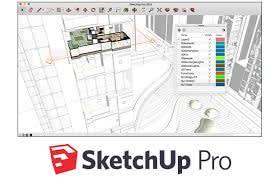
- Fast, intuitive push-pull modelling aimed at conceptual and architectural visualisation rather than precision mechanical design
- LayOut (Pro tier) turns 3D models into construction-document-ready 2D output
- Direct access to the 3D Warehouse, a large library of pre-made models
- New AI Assistant (Help Assistant, Generate Object) added across paid tiers in 2026.
SketchUp is the outlier on this list. It’s not designed for mechanical engineering at all, and its strength is the opposite of NX or CATIA's. It shines in getting a rough 3D concept down fast, for architecture, interior design, or early-stage product visualisation, without a steep learning curve.
Licensing and cost: Annual or monthly subscription via sketchup.com (Trimble); free web tier for non-commercial use only.
Workflow fit: Concept visualisation, architecture, and interior design work rather than detailed mechanical CAD. It earns its place on a "CAD software" list mainly because people searching that term often mean this, not because it competes directly with the other nine.
Quick comparison: CAD software at a glance
| Tool | Best for | Licensing model | Platform | Price |
|---|---|---|---|---|
| DesignSpark Mechanical | Fast, free direct modelling | Free (Explorer)/paid Creator, Engineer | Windows desktop | Free/paid tiers (verify current) |
| SolidWorks | Parametric design at enterprise scale | Subscription, cloud-connected | Windows/cloud-hybrid | $2,820–$4,716/yr |
| Autodesk Fusion | CAD+CAM+simulation, one platform | Subscription + free tier | Cloud, Win/Mac | Free (limited)/ $680/yr+ |
| Designcenter X | Complex assemblies, aerospace/automotive | Quote-based | Windows | Quote only |
| CATIA | Large-scale multidisciplinary development | Subscription (3DEXPERIENCE) | Cloud | $7,080/yr (Mechanical Essential) |
| PTC Creo | Parametric modelling + generative design | Configurable packages | Windows | Set at checkout |
| Designcenter Solid Edge | Siemens-ecosystem, mid-market | Subscription (XaaS) + token add-ons | Windows + browser tier | From $1 first month (verify current) |
| Onshape | Cloud-native collaboration, version control | Subscription + free tier | Browser only | Free/$1,500–$2,500/yr (verify) |
| FreeCAD | Open-source, community-supported CAD | Free, open source | Windows/Mac/Linux | Free |
| SketchUp | Conceptual visualisation | Subscription + free tier | Web/desktop/iPad | Free/ ~$129–$819/yr (verify). |
Learn How CAD Is Used Across Industries:
Explore our full series of CAD use case guides below to learn more about their use cases and impact across a wide range of sectors.
| Industry / Use Case | Guide |
|---|---|
| Architecture | CAD in Architecture: How It Works and Benefits |
| Construction | CAD in Construction |
| Manufacturing | The Use of CAD in Manufacturing |
| Civil Engineering | The Use of CAD in Civil Engineering |
| Electrical Engineering | CAD for Electrical Engineers |
| Building Design | CAD Software for Building Design |
| Automotive Industry | CAD in the Automotive Industry |
| Mechanical Engineering | CAD for Mechanical Engineering |
| Interior Design | How is CAD Used for Interior Design? |
| Jewellery Design | CAD for Jewellery Design |
| Rapid Prototyping | How is CAD Used for Rapid Prototyping? |
Choosing the right CAD software for your project
The right CAD tool depends on what you're building, not a universal ranking.
A weekend enclosure design and an aircraft assembly involving thousands of parts have almost nothing in common as design problems, and the CAD platform that suits one will frustrate you on the other. A good rule of thumb is to start from your project's complexity, budget, and team size, then match the tool. This is arguably a more prudent approach than starting from a "best" list and working backwards.
Comments