

When Regulation Changed Everything
Sometimes innovation does not begin with a breakthrough.
Sometimes, it begins with a restriction.
4Space Uniovi did not start as a robotics team. We were a drone team. Designing, building, and flying UAVs was our comfort zone. But new national regulations significantly tightened the operational framework for unmanned aerial vehicles, making flight testing — the core of our development cycle — increasingly complex.
In our case, environmental protection regulations related to local fauna further restricted access to many of our usual testing areas. What had once been open fields for rapid iteration became protected zones requiring permits and limitations. For a student team that depended on frequent testing, that shift changed everything.
So we asked ourselves a different question:
If we cannot fly, what else can we build?
That question led us from air to ground — and to rovers.
From Air to Ground: Discovering Rovers
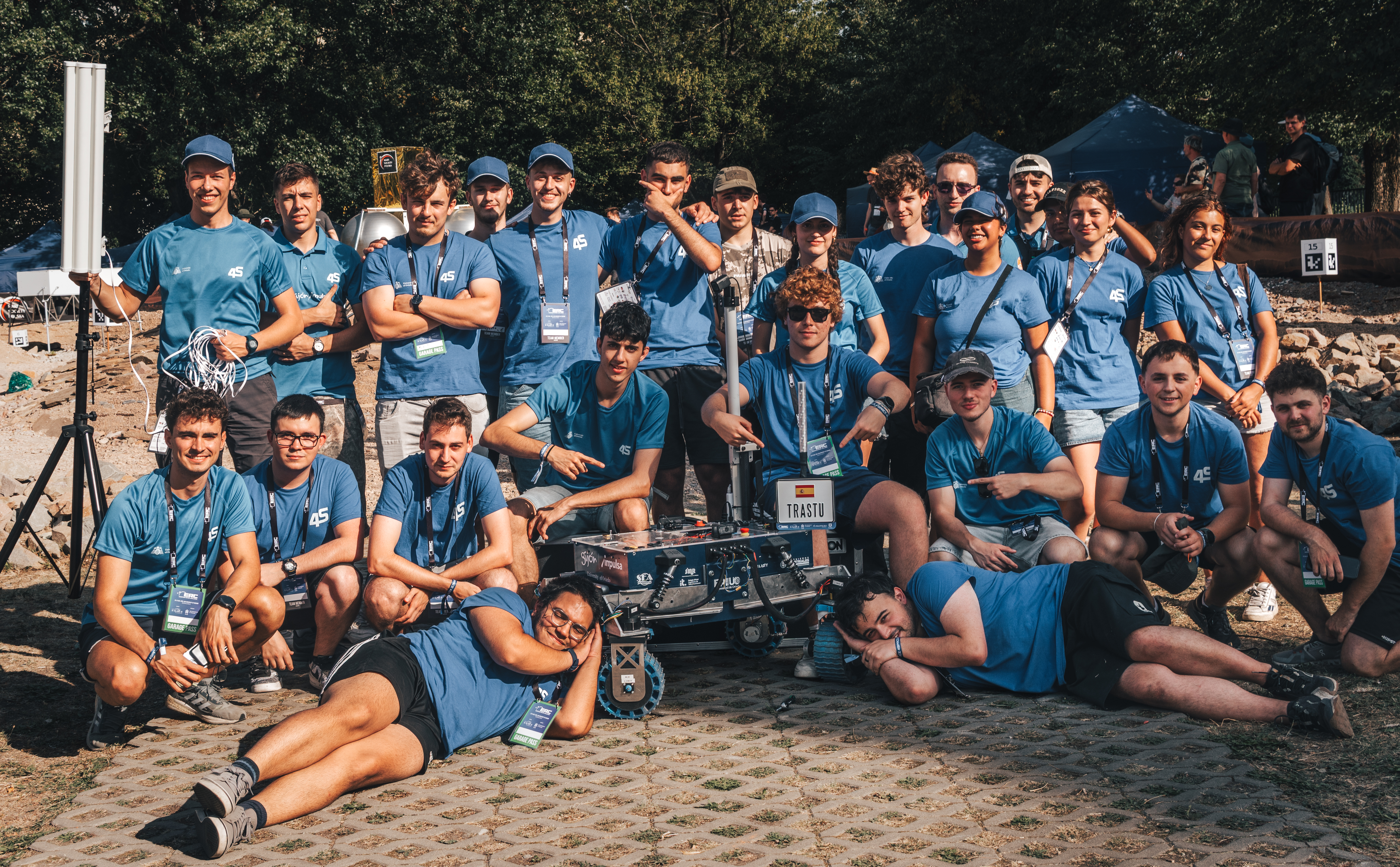
At first, ground vehicles were simply a way to continue developing electronics, control systems, and mechanical integration. But quickly, they became something more. We discovered the challenge of space robotics — mobility over rough terrain, distributed power systems, embedded architectures, manipulators, autonomy — and with it, a new ambition.
There was hesitation. None of us were “space robotics specialists.” But what we had was diversity. Students from mechanical engineering, electronics, software, telecommunications, physics, mathematics, and marketing all contributed their perspectives. Knowledge flowed naturally across disciplines. The rover became a shared learning platform.
The ERC Challenge and the Lesson Learned
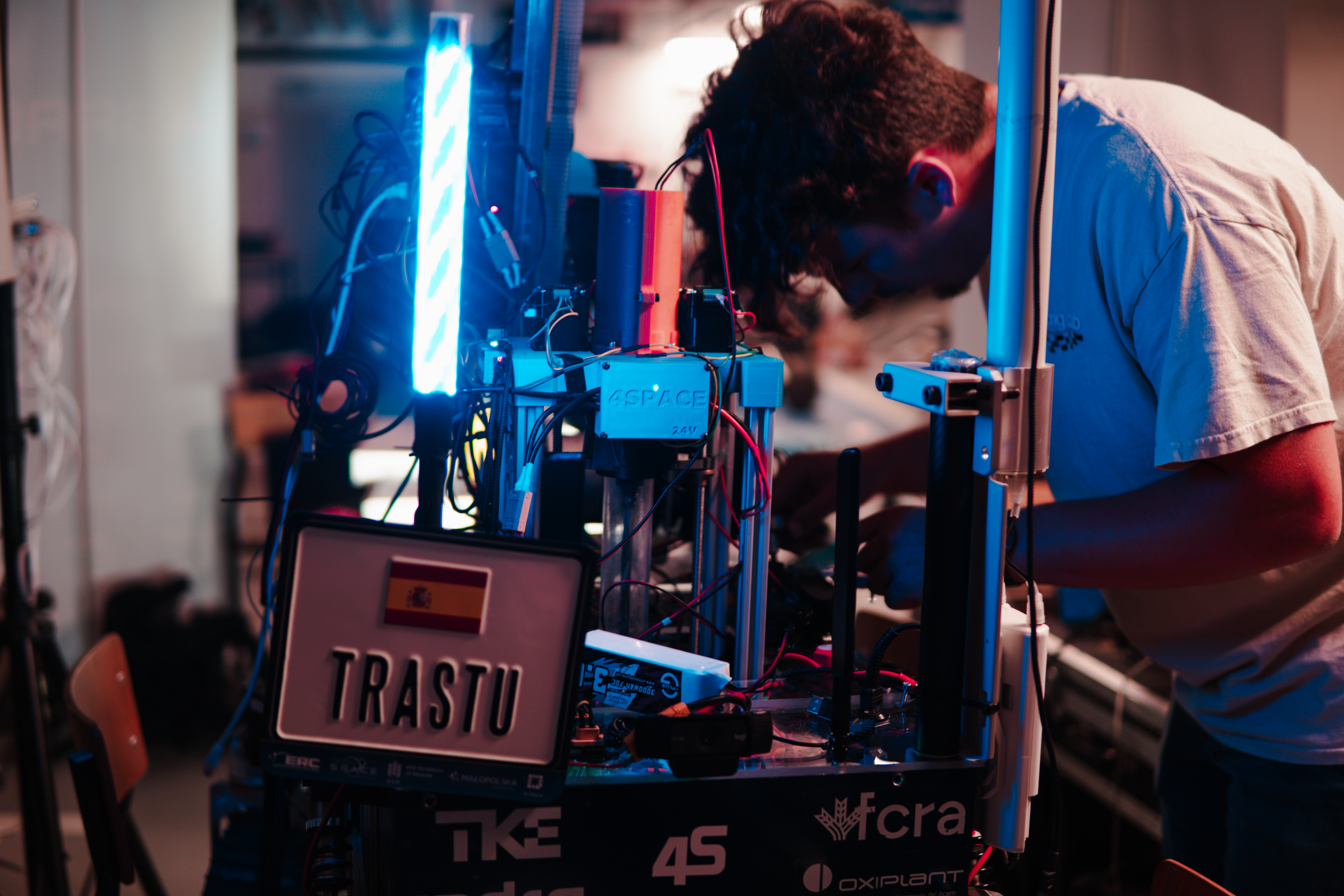
In our first official year as 4Space Uniovi, we set an ambitious goal: competing in the European Rover Challenge. Qualifying initially felt like a distant dream — until the chassis stood on its wheels, the electrical system powered up, and the rover moved under its own control. It was real.
But ERC is not just a mobility competition. It is built around mission-driven challenges, including a science task that simulates real planetary exploration objectives. The rover is not meant to simply move — it must collect samples, analyse data, and support decision-making under time pressure. For the first time, our platform was no longer just a machine; it was part of a scientific mission.
That changed our perspective.
Engineering suddenly had a purpose beyond performance. Every subsystem — power distribution, communications, manipulation, autonomy — had to operate reliably to support a meaningful objective. A failed connector or unstable software node was not just a technical issue; it could compromise the entire mission.
We worked relentlessly. But we also learned a hard lesson: if something can fail, it will. Delayed components and reduced integration time left us with limited full-system validation before the competition. We made it — but we understood what was missing.
Reliability.
Building the Next Generation Rover
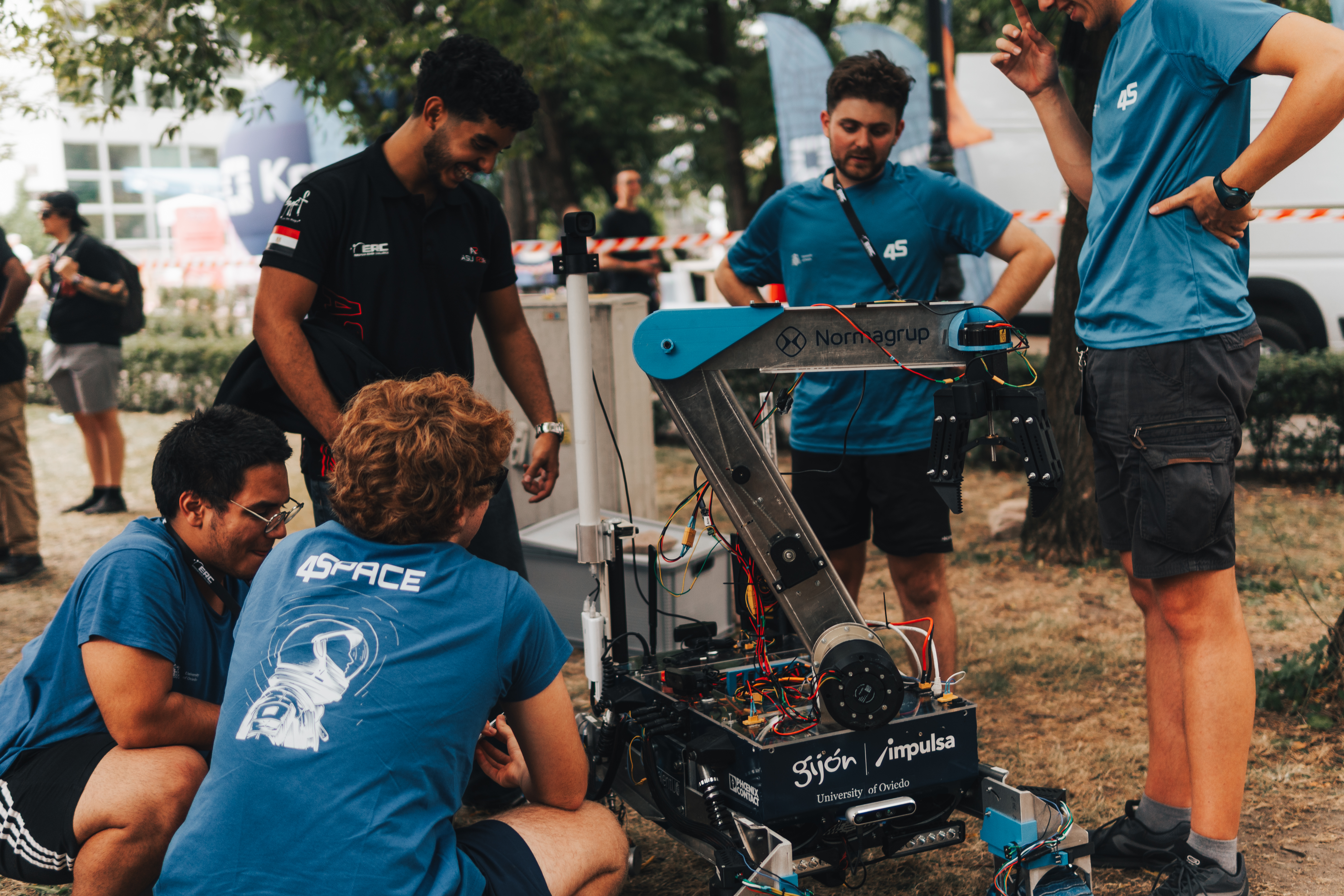
This season, everything is built around it. Earlier subsystem freeze dates. Structured integration phases. Extensive testing. Mandatory documentation. We are no longer designing just to make the rover work — we are designing it to withstand failure.
And this is where the support from RS makes a decisive difference.
Through the RS Student Project Fund, access to professional-grade tools, reliable electronic components, connectors, and technical equipment allows us to raise our engineering standards. Better tooling means safer assembly. Higher-quality components mean fewer weak points. Proper organisation and measurement capabilities ensure traceability and repeatability.
Reliability is not just a design principle — it is a capability. And RS is helping us build that capability.
Engineering That Endures
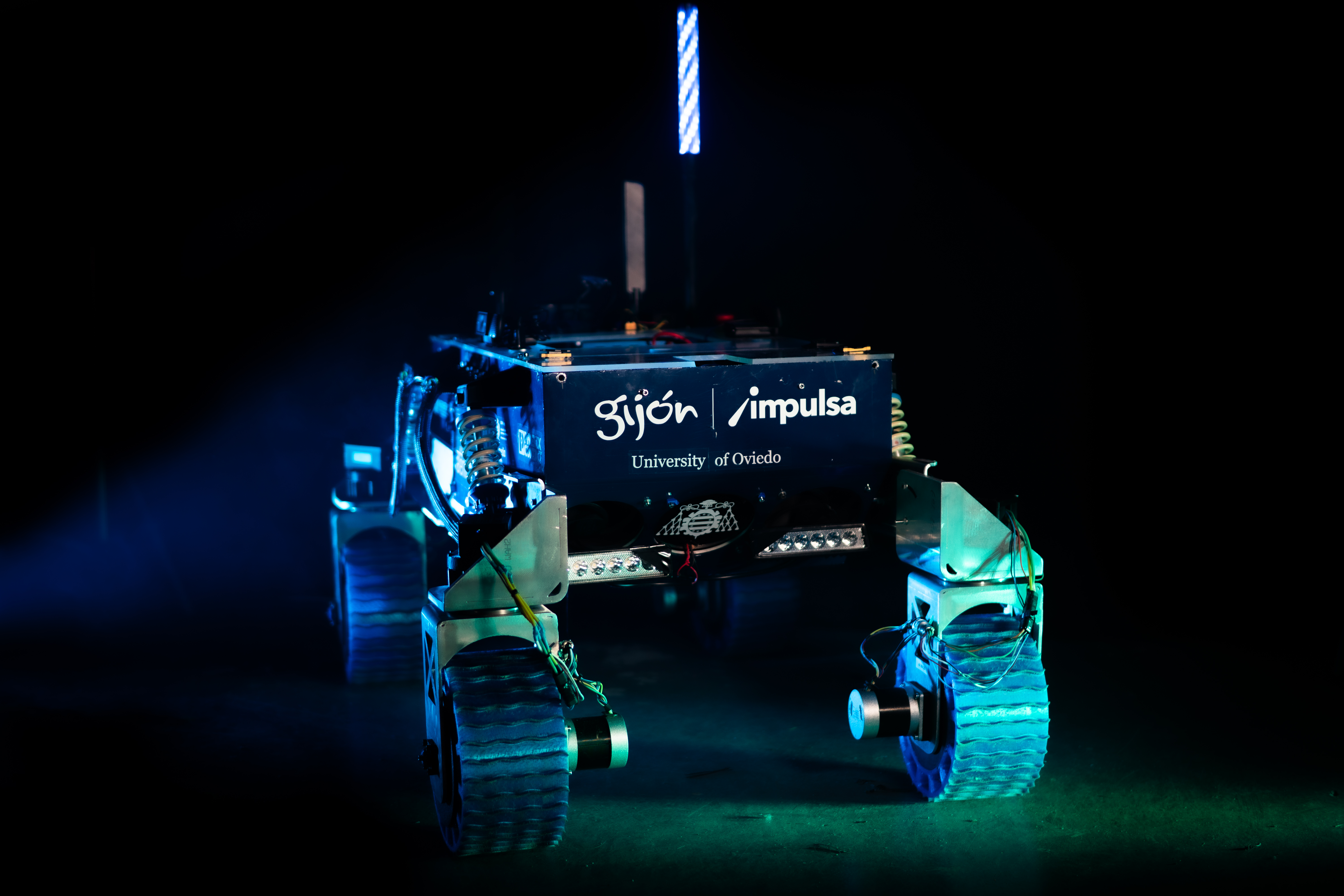
What began as a regulatory limitation pushed us into a completely new engineering challenge. It forced us out of the sky and onto the ground — where we found something bigger than we expected.
A rover.
A multidisciplinary engineering team.
And a mindset built on one simple idea:
Test it. Improve it. Repeat.
Until it does not just work — it endures.
Comments