

Collaborative sensing is quietly emerging as the foundation of innovation in the fields of intelligent infrastructure, driverless cars, and smart cities. It's about how devices communicate, share what they see, and collaborate to make decisions, not just about having more sensors or faster chips.
This is more than just a catchphrase if you're an engineer. We are moving away from discrete nodes and toward collaborative networks that act and think as a single entity.
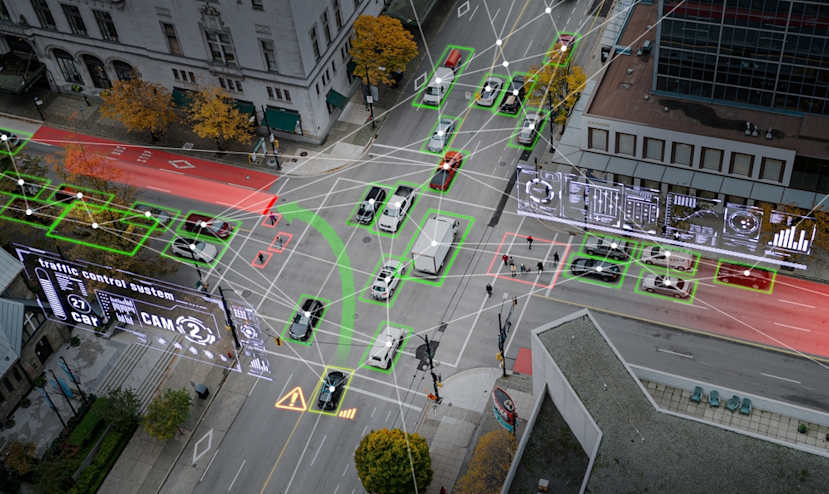
At its core, collaborative sensing is about devices working together. Think of a city where traffic lights, vehicles, air quality monitors, and even your smartphone are all feeding data into a shared ecosystem. Each device contributes a piece of the puzzle, and together they build a real-time, high-resolution picture of the world.

This isn’t theoretical; it’s already happening in autonomous driving, industrial automation, and urban planning. And it’s changing how we build everything from robots to roadways.
Where It’s Making an Impact
- Autonomous Vehicles - On their own, cars can only see so much. However, when they can "see" past obstacles, through fog, and around corners when they share sensor data, such as radar, LiDAR, and video feeds. That is an example of collaborative sensing.
- Industrial Automation - Machines with vibration, temperature, and acoustic sensors are able to identify irregularities on the manufacturing floor. However, when those machines exchange data, they may predict issues before they occur and adjust workflows in real time.
- Smart Cities - Where emergency services reroute based on real-time hazard data, air quality sensors send out alarms during pollution spikes, and traffic lights change depending on real-time congestion. That’s not the future, it’s the blueprint.
The Technology Behind It All
Collaborative sensing isn’t magic, to put it simply, it’s a smart stack of technologies working together. It begins at the edge, where data is handled by local processors at the point of generation. This implies fewer bottlenecks, less lag, and quicker decisions. The bulk of the work then takes place in the cloud, where AI models are trained, analytics are run, and long-term insights are pulled from massive datasets. In between all this, you’ve got data fusion engines, which are actually the brains that combine information from many sensors and systems to create something logical and useful.
High-speed networks like 5G and 6G hold everything together by ensuring that data flows in real time. Furthermore, none of it works without open protocols like MQTT and OPC UA, which make sure everything speaks the same language, no matter who built it.
Engineering Challenges (and Opportunities)
But everything is not simply plug and play; there are a few engineering challenges to overcome, namely:
- Privacy & Security - Sharing data means protecting it, so engineers are turning to federated learning and encrypted data exchange to keep things safe.
- Interoperability - Devices from different vendors need to speak the same language. The key is open standards.
- Data Fusion - (similar to sensor fusion, but there could be data from any source) Combining noisy, conflicting data is no small feat. AI and probabilistic models are helping make sense of it all.
Real-World Examples
Tesla’s Autopilot and Full Self-Driving (Supervised) systems rely on a suite of cameras and neural networks to interpret the environment. Tesla Vision enables collaborative perception by sharing data across its fleet to improve navigation and safety features like Navigate on Autopilot and Smart Summon.
Leading autonomous vehicle technology company Mobileye is creating collaborative perception technologies and 4D imaging radar that let cars exchange environmental information. This enhances safety and enables more accurate object detection in complex urban environments.
Bosch’s Cross-Domain Computing division integrates radar, camera, and LiDAR data to enable advanced driver assistance and automated driving with their systems being designed to manage the complexity of modern vehicles through collaborative sensing and AI-based perception.
Smart motorways in the UK, smart highways employ collaborative sensing amongst gantries, cameras, and vehicles to manage traffic, enforce speed restrictions, and react to emergencies instantly. These systems are part of the Smart Motorway Action Plan by National Highways.
Alphabet’s Sidewalk Labs piloted collaborative sensing in Toronto to optimise urban planning. Although the program has now been cancelled, their platform integrated data from infrastructure, mobile devices, and environmental sensors to inform decisions on mobility, energy, and public space usage.
Who’s Powering Collaborative Sensing?

Collaborative sensing isn’t just a concept; it’s a capability, and behind that capability are the brands building the sensors, gateways, and platforms that make it all work.
ifm electronic: Is a go-to for rugged, industrial-grade sensors with IO-Link functionality. Their equipment is designed to function in real-world settings, think temperature, vibration, and position detection with plug-and-play diagnostics. Ideal for predictive maintenance, machine monitoring, and smart factory upgrades. See the range of ifm electronic Sensors available from RS
Balluff: Is all about connectivity, with their IO-Link masters and RFID systems, designed to bring disparate devices into a unified, data-rich network. Ideal for asset tracking, condition monitoring, and scalable IIoT deployments. See the range of Balluff Sensors available from RS
Turck: With IO-Link and edge-ready modules, they are designed for speed and flexibility, making them perfect for applications like distributed automation, mobile robotics, and modular manufacturing lines where real-time data and adaptability are crucial. See the selection of Turck Sensors that RS offers.
Omron: Blends sensing with intelligence, with their photoelectric and proximity sensors integrating seamlessly into collaborative robotics and vision systems. Ideal for human-machine collaboration, safety systems, and adaptive automation. See the range of Omron Sensors available from RS
STMicroelectronics: Is the silicon behind the scenes, with their MEMS sensors and wireless modules, which are the building blocks of edge intelligence and mobile sensing and used for embedded systems, wearables, and smart mobility platforms. See the range of STMicroelectronics MEMS Sensors available from RS
RS PRO: Offers a value alternative in smart sensing, with their IO-Link-compatible sensors being ideal for engineers looking to prototype or scale without breaking the budget. Ideal for general-purpose automation, pilot projects, predictive maintenance, machine monitoring, and scalable retrofits. See the range of RS Pro Sensors available from RS
Final Thoughts
Collaborative sensing is not just a technological evolution; it’s a systems-level transformation. For engineers, and gives engineers the chance to create intelligent, resilient, and adaptable systems that can respond to real-world complexity in real time.
Comments